

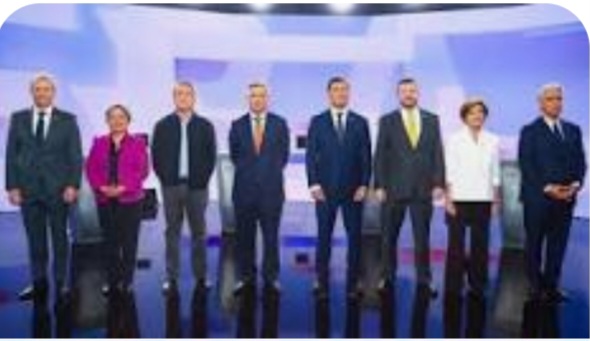
Chileans will head to the polls tomorrow for a pivotal presidential election that pits the governing leftist coalition against a wide field of right-wing contenders, in a vote that will also reshape the country’s legislature.
Eight candidates are in the race, but none are projected to secure the required 50 per cent plus one vote to win outright, making a runoff on 14th of December between the top two contenders highly likely.
Although Chilean law prohibits the publication of opinion polls in the 15 days leading up to the vote, the last available surveys showed Jeannette Jara – the governing coalition’s candidate from the Communist Party – holding a narrow lead.
She was followed by far-right Republican Party candidate José Antonio Kast. Tomorrow’s vote is set to mark a crucial moment for Chile, as voters weigh sharply contrasting visions for the nation’s political and economic future.
The Candidates and their Profiles.
The race is closed with eight participants competing for Chile’s presidency. This is the most polarized election Chile has seen in the last decade, marked by clashes between extremes while the center struggles to stay relevant.
José Antonio Kast (Republican Party) leads most polls with 28-30%. A lawyer and former UDI deputy, he broke away to form the Republicans and has become the main voice of the far right.
His message is to restore order through “mano dura” security policies, mega-prisons, and military deployment, while reactivating the economy with tax cuts and deregulation.
Jeannette Jara (Unidad por Chile, Communist Party) is close behind, polling at 27-28%. A lawyer and public administrator, she served as Minister of Labor under Boric, where she pushed through the 40-hour workweek and a pension reform proposal.
She presents herself as pragmatic and “dialogante”, framing security as a social right and defending a stronger state role in investment and regulation.
Evelyn Matthei (Chile Vamos, UDI) currently polls between 14 and 17%. With a career as deputy, senator, minister, and mayor of Providencia, she is the candidate of the traditional center-right.
She projects competence and stability, offering investment in innovation and a technocratic style meant to contrast with polarization, but still faces the challenge of mobilizing her base while appealing to swing voters.
Franco Parisi (Partido de la Gente) polls between 7 and 11%. An economist and academic, he is again running as the outsider, relying on digital campaigning and anti-elite rhetoric. His base comes from voters frustrated with traditional politics, but his lack of organization continues to limit his chances.
The other four candidates are Johannes Kaiser (National Libertarian Party), Marco Enríquez Ominami (Independent), Harold Mayne Nicholls (Independent) and Eduardo Artés (Independent). Each of these candidates currently polls below 10%.