

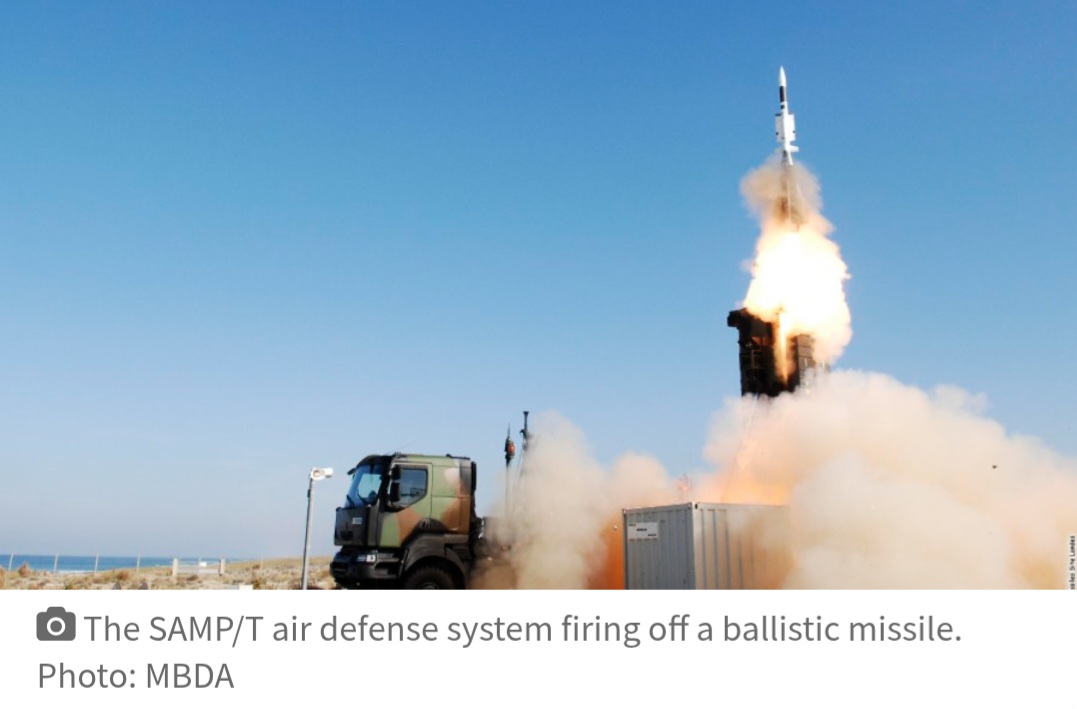
Turkey is considering buying either the Patriot or the SAMP-T air defense system as it seeks to strengthen its missile defense capabilities, according to a report by Reuters.
Defense Minister Yasar Guler said Ankara is evaluating “all options” to address gaps in its defense network, including potential purchases from the US and Europe.
“Our core approach on this issue is clear: we are open to all cooperation that meets our country’s security needs, that includes technology-sharing and joint production, and that is sustainable and in line with the spirit of alliance,” Guler told Reuters.
He added that technical and political discussions with the relevant countries are ongoing.
Turkey has long sought to improve its layered air defense capabilities but still lacks a comprehensive long-range missile shield, relying in part on NATO assets and allied fighter aircraft.
According to Guler, Ankara’s priority is to develop a more integrated system while expanding domestic defense production. He said work on Turkey’s Steel Dome is continuing and should be completed “as soon as possible.”
Turkey Expands Missile Defenses.
Turkey has steadily invested in both indigenous and foreign systems as it seeks to reduce reliance on NATO while building a layered missile shield.
One of Ankara’s most significant programs is the Siper long-range air defense system, locally developed by Aselsan, Roketsan, and the Turkish Scientific and Technological Research Institution.
In January, the Siper-1 was formally integrated into the Steel Dome architecture after completing serial production acceptance tests in late 2025. The system is designed to engage aerial threats at ranges of up to 150 kilometers (93 miles).
Turkey has also fielded the Hisar family. The Hisar-A+ and Hisar-O+ provide short- and medium-range protection against aircraft, helicopters, drones, and cruise missiles, forming lower layers of the country’s expanding network.
At shorter ranges, the Korkut self-propelled anti-aircraft gun system and the Sungur portable air defense missile have entered service to counter helicopters, low-flying aircraft, and unmanned aerial systems.
