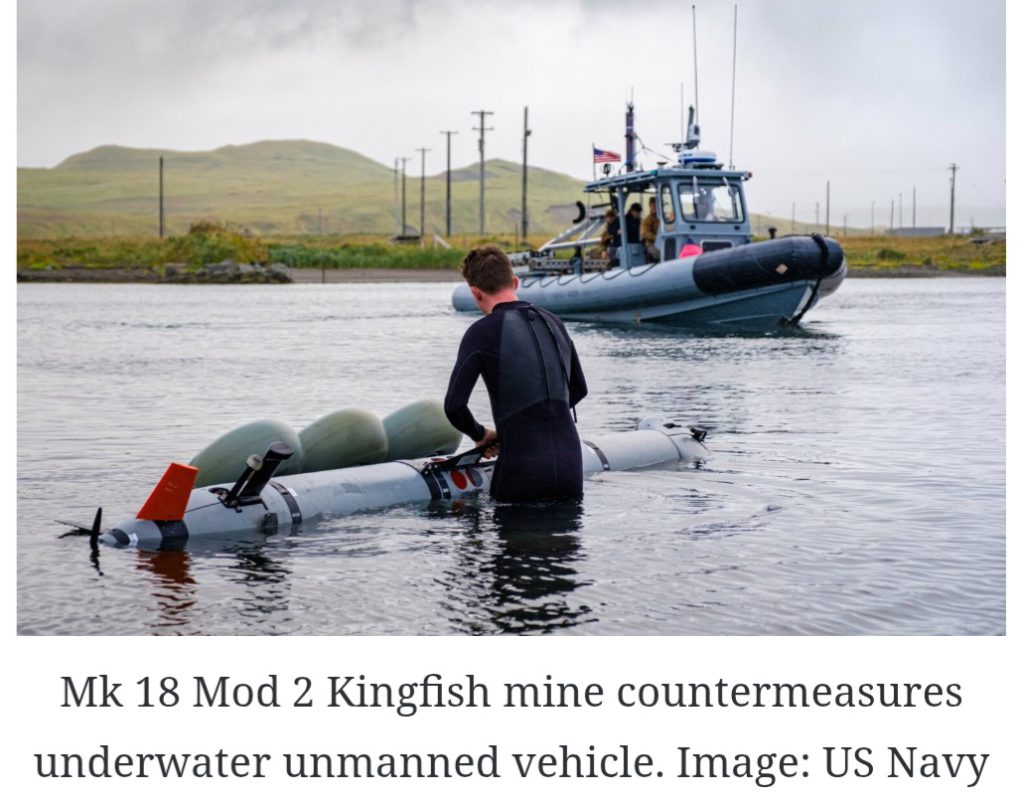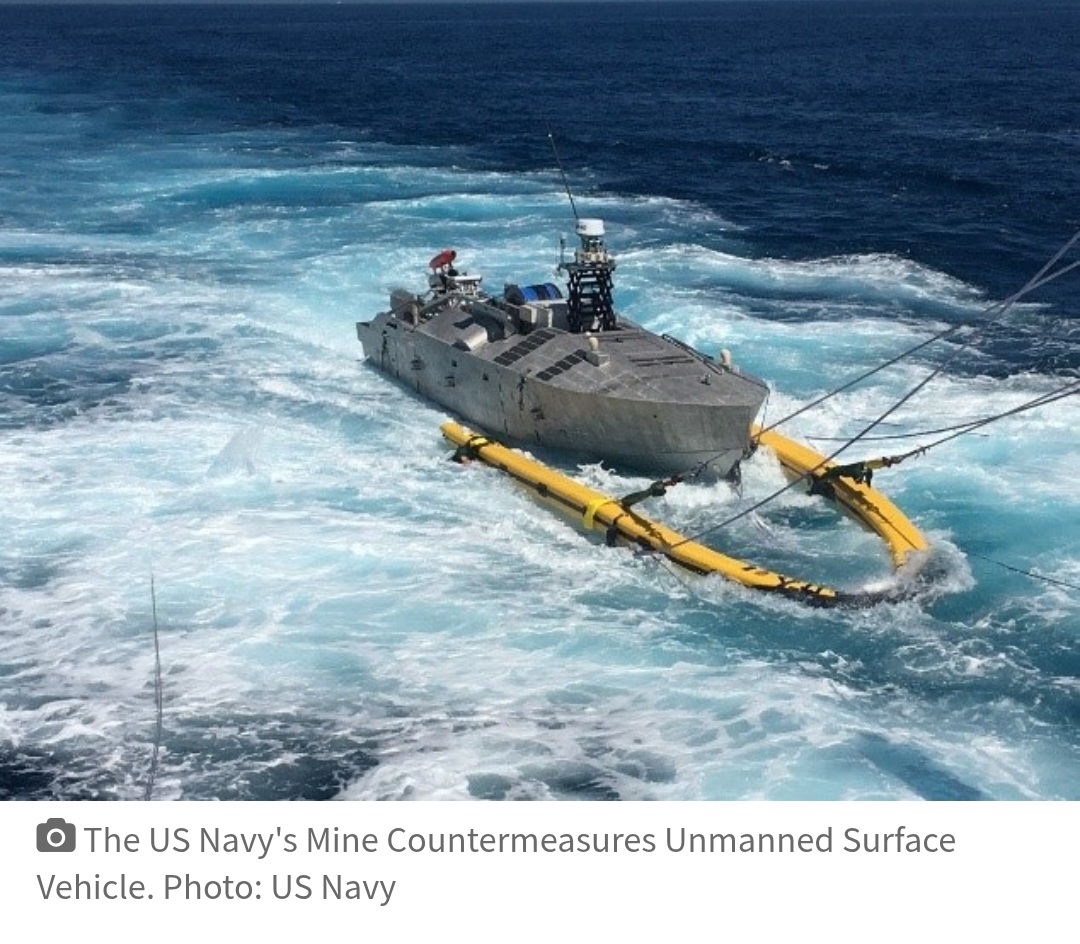
The US Navy and Defense Innovation Unit (DIU) have launched a $10-million prize challenge to seek next-generation commercial mine countermeasure solutions capable of detecting and neutralizing naval mines at standoff distances.
Called the Mine Countermeasures (MCM) Modernization initiative, the challenge seeks mature technologies that can be deployed within six months, underscoring the urgency of expanding mine countermeasure capabilities beyond traditional manned platforms.
The jam-resistant solutions will be deployed from the US Navy’s unmanned surface vessels and are expected to detect and neutralize near-surface and bottom mines.
Selections will be made under three categories: near-surface, moored, and high-volume mine threats; bottom mine detection; and bottom mine engagement.
“We are looking for mature, rapidly fieldable commercial solutions that can complete the detect-to-engage kill chain while keeping our warfighters entirely out of the threat zone,” DIU Maritime Principal Director Jarred Conley said.
“By shifting the operational burden to modular, communication-resilient uncrewed systems, we can drastically increase the speed of MCM response.”
The solutions should be at Technology Readiness Level 7 or higher and capable of operating in GPS-denied environments. They should reach designated targets accurately while maintaining low positional drift during area searches.
Human-in-the-loop authorization will be mandatory, with mine neutralization carried out only following operator approval and with a high probability of kill.
Where a launcher is required, vehicle weight should not exceed the 250-pound (113-kilogram) objective or the 500-pound (227-kilogram) threshold, while power consumption must remain below 1,000 watts.
Selected performers will receive up to $200,000 and an invitation to compete in on-water testing events, with top performers in each track eligible for awards of up to $3 million. International participation from qualifying countries is encouraged.
Successful completion of the prize challenge may result in the award of a follow-on prototype other transaction and/or procurement for experimental purposes.
To Neutralize Maritime Mine Threats.
The initiative comes as the US seeks to secure the Strait of Hormuz from maritime mine threats amid tensions with Iran and concerns over disruptions to global shipping and energy supplies.
While the US can draw on modernized technologies to remotely detect and remove mines, clearing a strategic waterway such as the Strait of Hormuz would remain a slow, multi-step process due to the possibility of hostile attacks and the need to verify safe transit routes.
“Reopening a chokepoint like the Strait of Hormuz after any mining activity is a complex and high-risk task,” EUROATLAS Chief of Strategy & Partnerships Verineia Codrean told The Defense Post.
“The challenge is not only clearance, but the time required to build enough confidence to resume controlled traffic,” she added.
To address the challenge, Codrean suggested that fleets of autonomous underwater vehicles (AUVs) could verify a navigable corridor in as little as 24 hours without placing crews and high-value assets in immediate danger.
“While the pace of reopening ultimately depends on the security situation above the water, these systems can play a valuable role in the early stages – particularly in surveying large areas quickly and identifying safe transit corridors,” she explained.
She added that advances in battery systems, hydrogen fuel cells, AI, and autonomy are overcoming the endurance and support-vessel limitations of earlier unmanned systems, allowing AUVs to operate longer and farther from nearby ships.
“Earlier generations of unmanned systems have been constrained by limited endurance and reliance on nearby support vessels,” she explained.
“However, more recent advances in AUVs are starting to address some of those constraints. Improvements in energy systems – such as longer endurance battery configurations and hydrogen fuel cells – are significantly extending how long AUVs can operate in the field, in some cases from days to potentially weeks.”
According to Codrean, the systems can now perform preprogrammed missions, map the seabed, identify anomalies, detect potential threats, and relay high-resolution environmental data back to operators from safer distances.