

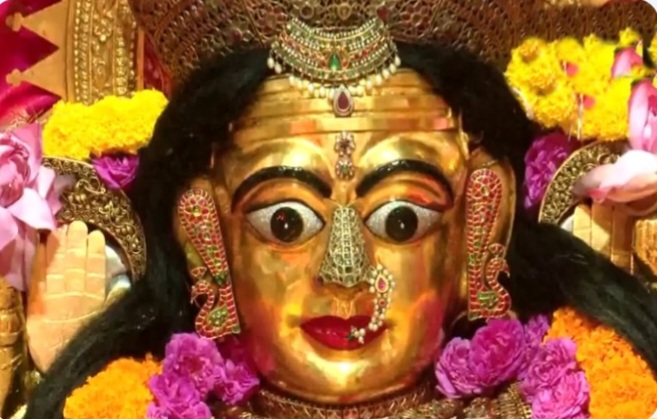
In Maharashtra, the nine-day Sharadiya Navratri festival began with religious fervour today at prominent goddess temples in Kolhapur, Mahur, Tuljapur and Vani today.
Special prayers, traditional processions and religious ceremonies were held at Shri Mahalaxmi Temple in Kolhapur, Renuka Mata Temple in Mahur, Tuljabhavani Temple in Tuljapur and Shri Kshetra Saptashrungi Gad in Vani marking the onset of the festival.
The temples have been decorated with flowers and illuminated with decorative lights, as devotees gathered in large numbers to seek the blessings of the presiding deities.
At the Shri Mahalaxmi, or Ambabai Temple, in Kolhapur, members of village-based mandals arrived in musical processions to collect sacred flames, known as jyots, to carry back to their villages.
This year, the goddess will be worshipped in ten different forms, including Skandamata, Vaishnavi, Trigunatmika Mahalakshmi and Mahishasuramardini.
The temple administration has made arrangements to facilitate darshan for the large number of devotees expected during the festival to be observed till 20th of October.
At the Shri Renuka Mata Temple at Mahur in Nanded district, the traditional Ghatasthapana ceremony was performed at 12.30 PM, followed by rituals including abhishek and Kumarika Pujan.
The temple and its surroundings have been decorated with flowers, and various religious programmes have been arranged for the festival.
Meanwhile, Navratri celebrations began at the Shri Tuljabhavani Temple in Tuljapur in Dharashiv district, with a traditional procession carrying water-filled earthen pots from Kallol Tirtha. Devotees chanted “Aai Bhavani cha Udo Udo” to the rhythmic sounds of traditional instruments, including the sambal and tutari.
Around 75,000 devotees visited Shri Kshetra Saptashrungi Gad, located near Vani in Nanduri village of Nashik district. Devotees carrying sacred flames began their journey from Nanduri to the hilltop shrine as early as 4 a.m.
At 6 am. special rituals were performed, worshipping the goddess’s gold, silver and precious ornaments. This was followed by a ceremonial procession and the traditional Ghatasthapana ritual, formally ushering in the Navratri festivities at the revered shrine.
Pilgrims from Maharashtra, Karnataka, Andhra Pradesh and Telangana participated in the celebrations. Devotees are expected to continue visiting the shrines across Maharashtra throughout Navratri and until Kojagiri Purnima.