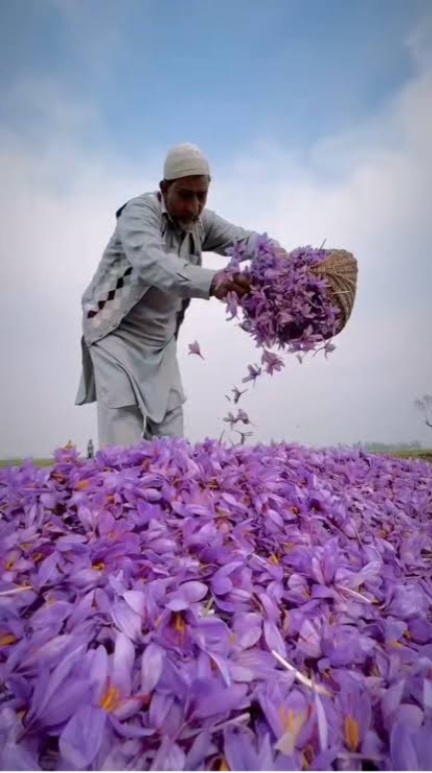
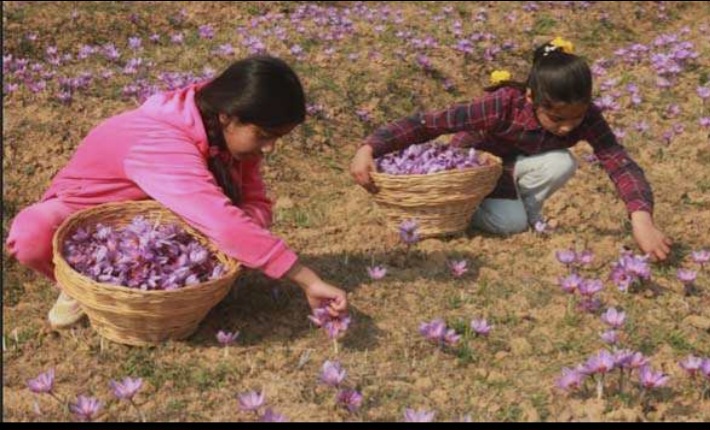
On October 2, 2026, the Union Territory of Ladakh launched an ambitious pilot project to cultivate saffron for the very first time on a large scale.
Undertaken by the Ladakh Administration under the guidance of Lieutenant Governor Vinai Kumar Saxena, the initiative aims to assess the suitability of this high-value crop under Ladakh’s high-altitude agro-climatic conditions and diversify local agriculture.
Key highlights of the pilot project include,
Location and Scale. The Site. The planting took place at Command Area Gate No. 27 in Spituk Pharka, Leh.
The Volume. Nearly 800 kg of premium Iranian saffron corms (numbering around 90,000) have been planted across 4,000 square metres of land.
Corm Quality. To ensure high-quality production, experts selected premium corms meeting strict specifications: a circumference of 8–10 cm, a diameter of 2.5–3 cm or larger, and a weight of at least 10 grams.
Reclaiming Barren Land. Project Him Sarovar.
The cultivation site sits on land that was completely barren until recently. It was restored and rejuvenated under Project Him Sarovar, a broader ecological initiative aimed at improving water security and transforming degraded areas into productive assets.
Water management is supported by the recently restored Igoo–Phey irrigation canal, which channels unutilised or excess fresh water to improve soil moisture.
The site also benefits from four adjacent water ponds built under Project Him Sarovar, holding a combined storage capacity of roughly 24 million litres.
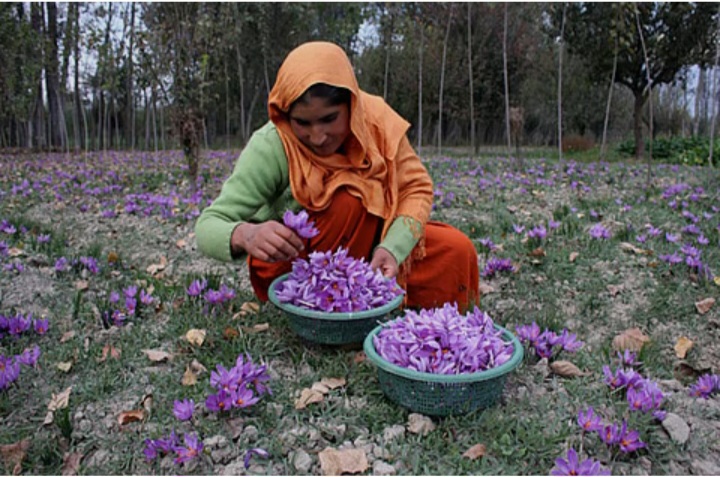
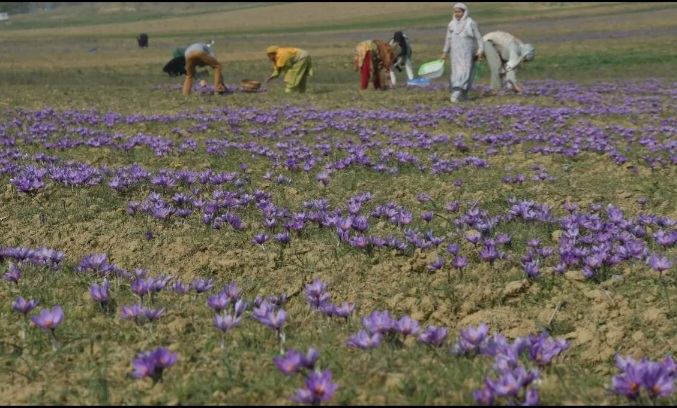
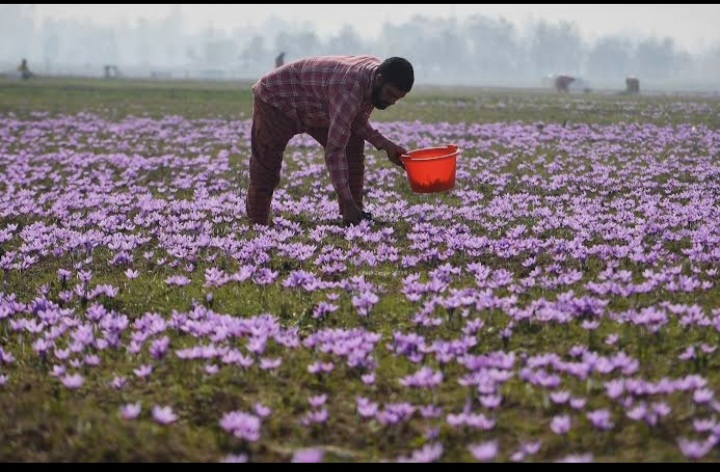
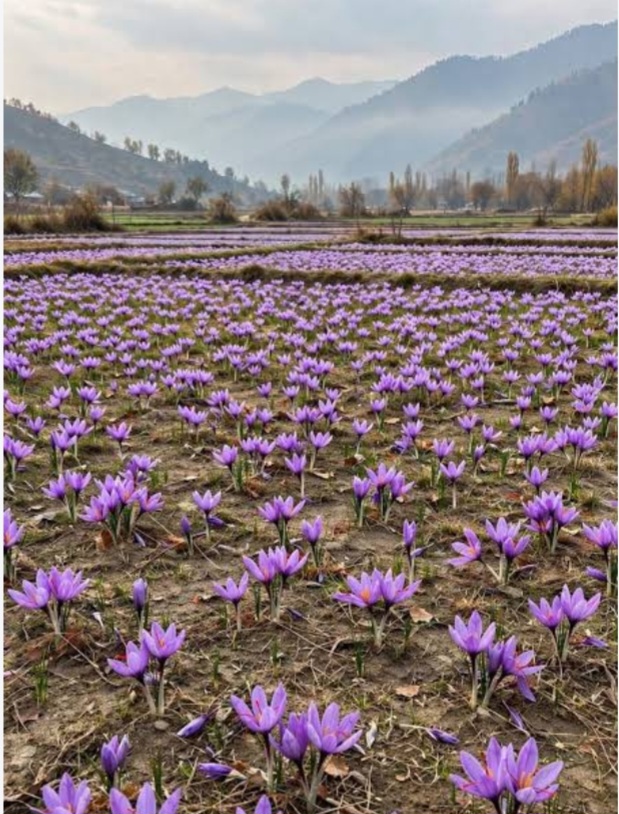
Economic and Agricultural Objectives. Crop Diversification: Saffron (often called “red gold”) is highly lucrative. The administration hopes to replicate the “stupendous success” of their recent high-altitude floriculture experiments, which saw 25 lakh Lilium and Gladiolus flowers planted across Leh to boost tourism and alternative livelihoods.
Income Generation, If successful, this high-value alternative crop will open brand new revenue streams for local farmers, youth, and Self-Help Groups (SHGs).
Institutional Support: While this large-scale pilot launched in late 2026, the project builds on foundational research from the CSIR-Indian Institute of Integrative Medicine (CSIR-IIIM), which has been collaborating with the Ladakh Agriculture Department since 2023 on technology transfer and localized trials.
Traditionally, Jammu and Kashmir accounts for about 90% of India’s saffron production. If this pilot succeeds, Ladakh could become India’s next major hub for premium saffron cultivation.