

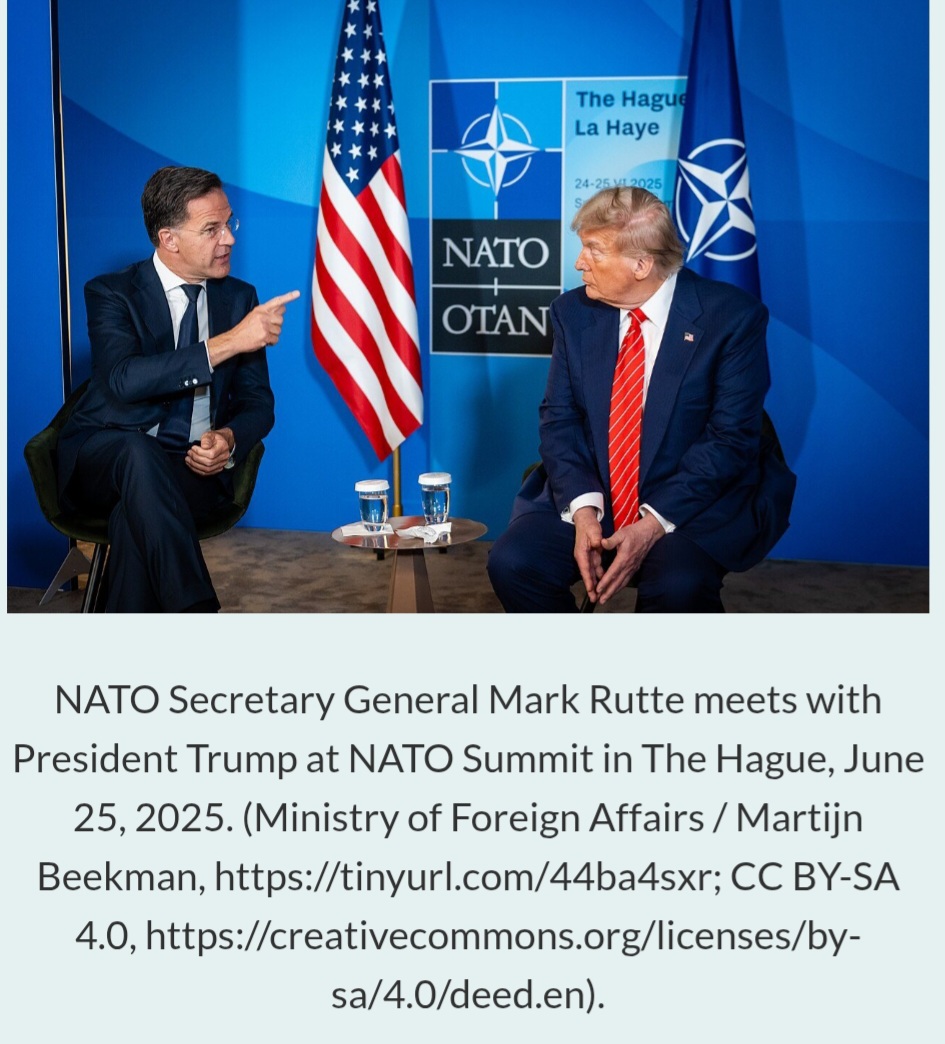
When NATO leaders gather in Ankara this July, they will do so in the shadow of a recent U.S. announcement that will cast a shadow over the discussions: The United States has moved to reduce its contributions to the NATO Force Model, the framework through which the alliance “organises, manages, activates and commands national forces” to support its core activities, by one-third to one-half.
The Pentagon framed the cuts not as a strategic adjustment but as a test of allied commitment, or “an opportunity for allies to demonstrate that they have heard President Trump’s call for them to step up and take primary responsibility for Europe’s conventional defense.”
That framing captures the central imperative of what the Trump administration has dubbed “NATO 3.0”: burden-sharing, pursued as an end in itself.
Contemporary disagreements between the U.S. and its NATO allies have intensified over political, economic, and security issues. Disputes over trade, tariffs, defense spending, and expeditionary support reveal an unhealthy frustration with burden-sharing demands and a strategic recalibration rather than a wholesale fear of U.S. abandonment.
Some European leaders’ reactions to U.S. demands for burden-sharing and strategic reciprocity have ranged from performative indignation to explicit efforts to redefine NATO on more European terms and push America out of the alliance.
The complaint of an underfunded NATO is not new; it is a recurring theme in American strategic discourse. In 2002, President Bush called for NATO reform with new capabilities and interoperability.
In 2016, President Obama used the term ‘free riders’ to argue that Europe must take more responsibility. Recently, German Chancellor Friedrich Merz admitted, “We have been free riders in the past, and the Americans guaranteed our freedom and our security.”
This friction highlights the main operational tension NATO 3.0 seeks to address. At the June 2026 NATO Defense Ministerial in Brussels, U.S. Secretary of War Pete Hegseth described NATO 3.0 as “modeled on NATO 1.0 that won the Cold War, with allies leading Europe’s defense.” He said NATO should be “a hard-edged war-fighting organization.”
He also described NATO 2.0 as the post-Cold War effort “no longer focused on defending Europe” but on “climate change and defense austerity.” While some may sneer at these descriptions, they are hard to argue against.
NATO 3.0 is likely to be a bold reboot, with European countries leading their defenses while the U.S. shifts focus to the Indo-Pacific and homeland defense, remaining a strategic and nuclear safety net.
The U.S. is reducing or redeploying its forces to pre-2022 levels and urging a more self-reliant Europe. This does not mean weakening NATO; instead, it aims for a stronger, Europe-focused defense to support NATO’s long-term sustainability.
A capable Europe could enhance deterrence and security by lessening its reliance on large-scale U.S. intervention, but European military growth should complement, not replace, American power.
To resemble NATO 1.0, Hegseth’s NATO 3.0 must understand and embrace the future role of nuclear weapons. The key difference is the size and scope of nuclear arsenals, with fewer weapons overall.
While Russia’s non-strategic nuclear arsenal remains more than ten times larger than NATO’s, the aggregate nuclear stockpiles have declined by more than 80 percent since 1992.
Smaller arsenals render each remaining weapon more significant and more vulnerable, making allied nuclear forces increasingly valuable instruments of deterrence. NATO 3.0’s success depends on three focus areas.
First, NATO must abandon the presumption that a smaller nuclear arsenal can effectively deter Russia. Equally flawed is the belief that maintaining fewer weapons automatically signals reduced threat to Moscow. Deterrence credibility does not rest on symbolic restraint; it relies on perceived capability and willingness to impose unacceptable costs.
In today’s competitive nuclear environment, NATO needs more—not less—nuclear capability in Europe, to ensure credible deterrence. Smaller arsenals make each weapon’s survivability more critical, increasing the risk of vulnerability, technical failure, or denied retaliation.
A strong nuclear posture enhances resilience, confidence, and the capacity to absorb loss whilst ensuring NATO can deter nuclear coercion and attack.
Expanding NATO’s nuclear capacity involves more than adding American weapons. Macron’s idea of “forward deterrence” seeks to integrate France’s nuclear forces into European security without formal guarantees.
While the U.S. shares its arsenal with allies, France would retain sole control over its nuclear weapons, targeting, and use. Macron states France’s core interests may include defending against attacks on European partners that could threaten French sovereignty.
Poland, interested in the French offer, also seeks its own nuclear capability. President Nawrocki recently emphasized strengthening Poland’s security “even with nuclear potential.” More nuclear-armed states in the alliance could be necessary to deter Russia and reassure uneasy allies.
