

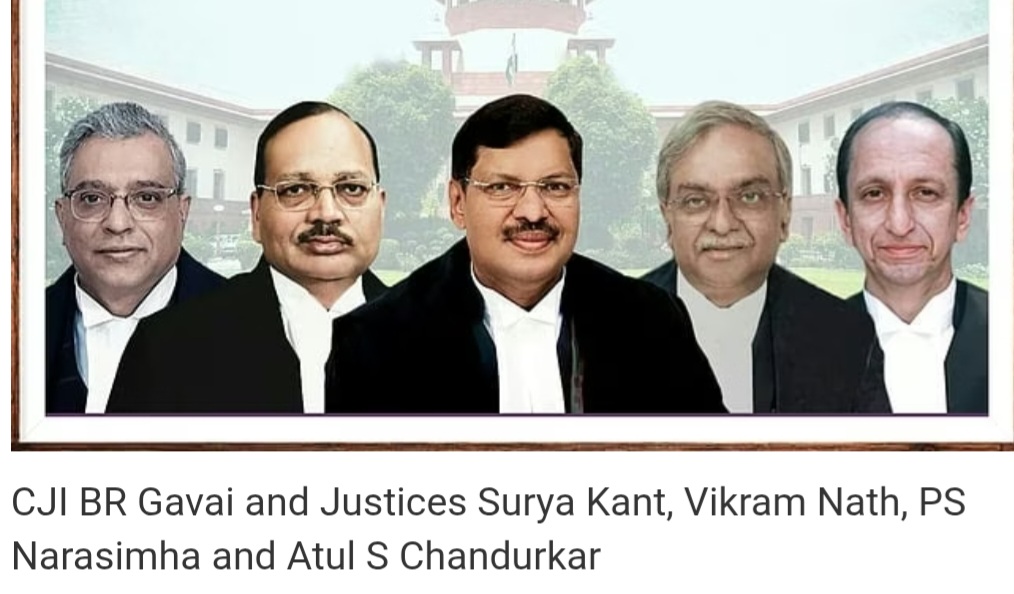
The Constitution Bench of Chief Justice of India BR Gavai and Justices Surya Kant, Vikram Nath, PS Narasimha and Atul S Chandurkar held that the timelines set by the previous judgement as well as “deemed assent” to bills in case of non-adherence by President or Governor to such timelines, amount to usurping the powers of the Governor/ President by the Court and the same is not permissible.
“The imposition of timelines is strictly contrary to the elasticity that Constitution has preserved. The concept of Deemed assent in the context of Articles 200 and 201 presupposes that one Constitutional authority, namely court, could play a substitutional role for another Constitutional functionary authority – the Governor or President.
Such usurpation of gubernatorial powers of governor or president is antithetical to the spirit of the constitution and the doctrine of separation of powers. The concept of deemed assent of pending bills amounts to virtually takeaway of role of another Constitutional authority,” the Court held.
The Governor’s role to grant assent to bills under Article 200 cannot be supplanted by another authority by way of deemed assent, the Bench made it clear.
Pertinently, as a consequence of the above conclusion, the Court ruled that the discharge of functions under Articles 200 and 201 by the Governor and President are not justiciable, meaning they cannot be challenged before Court.
Judicial review and scrutiny can be involved only once the bill becomes law and not before that, the Court underscored.
“It is unfathomable to suggest bills can be brought to court rather than being opined on under Article 143 as referred by the president under advisory jurisdiction. President need not seek advice of this court every time when bills are referred to him,” the Court said.
The Court can only step in when there is an inordinate and unexplained delay and this has to be done based on each individual case.
“Not everything will lead courts to issue automatic directions to act and it has to be measured based on appropriate circumstances and this courts can issue limited directions in terms of constitutional accountability,” the Court held.
The Court also added that Governors cannot act as a super Chief Ministers and there cannot be two executives within a State.